+86-0514-82202225 / +86-173 5499 5903



 English
 中文简体
中文简体 русский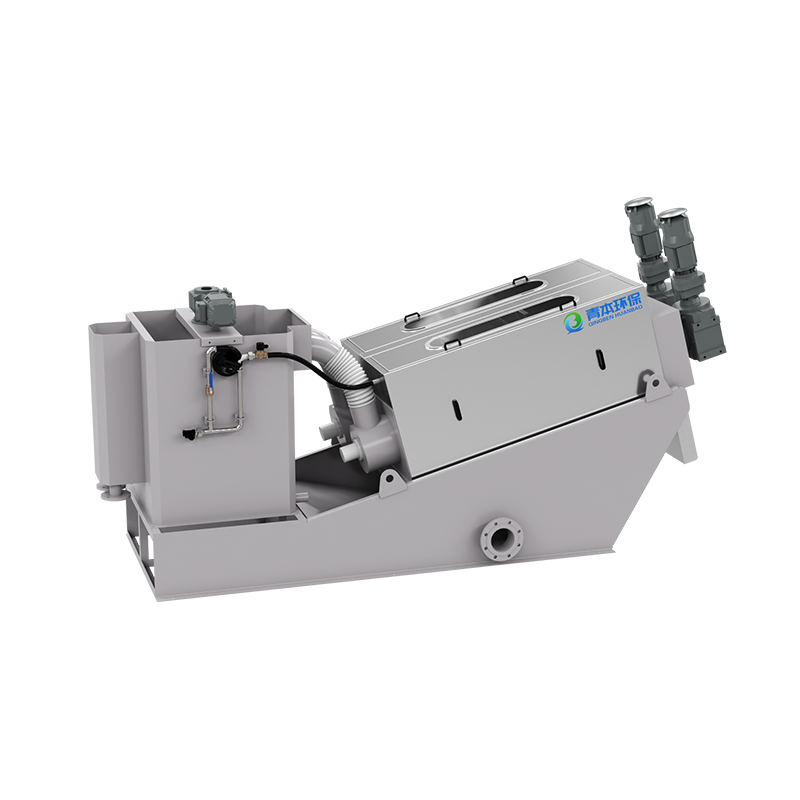
Quick Answer
Over 80% of modern wastewater treatment facilities now rely on screw press sludge dewatering machines as their primary solid-liquid separation technology. The reason is clear: screw press dewatering delivers continuous, low-energy, low-maintenance operation with cake dryness levels of 18–25% DS and the ability to handle a wide range of sludge types — all in a fully automatic, enclosed system. Compared to belt presses and centrifuges, the automatic screw press dewatering machine reduces energy consumption by up to 50% and cuts operator intervention significantly, making it the most practical high efficiency sludge dewatering press for factories, municipalities, and industrial plants alike.
Контент
- 1 Why Screw Press Dewatering Has Become The Industry Standard
- 2 Key Performance Metrics That Separate Screw Press From Competing Technologies
- 3 How A Screw Press Sludge Dewatering Machine Actually Works
- 4 Industries Where The Screw Press Wastewater Treatment Machine Delivers Proven Results
- 5 Automation Features That Make 24/7 Unattended Operation Possible
- 6 How To Select The Right Screw Press For Your Facility
- 7 Operational Cost Savings: What Plant Managers Report After Switching
- 8 About Qingben Environmental Technology: Your Trusted Screw Press Manufacturer
- 9 Frequently Asked Questions About Screw Press Dewatering Machines
Why Screw Press Dewatering Has Become The Industry Standard
The shift toward screw press wastewater treatment machines did not happen overnight. Over the past decade, wastewater engineers and plant managers worldwide have moved away from traditional dewatering technologies in favor of the screw press design — and the operational data consistently backs up that decision. Whether in food processing, paper mills, municipal sewage plants, or pharmaceutical facilities, the screw press sludge dewatering machine has proven its value across virtually every sludge type and treatment scale.
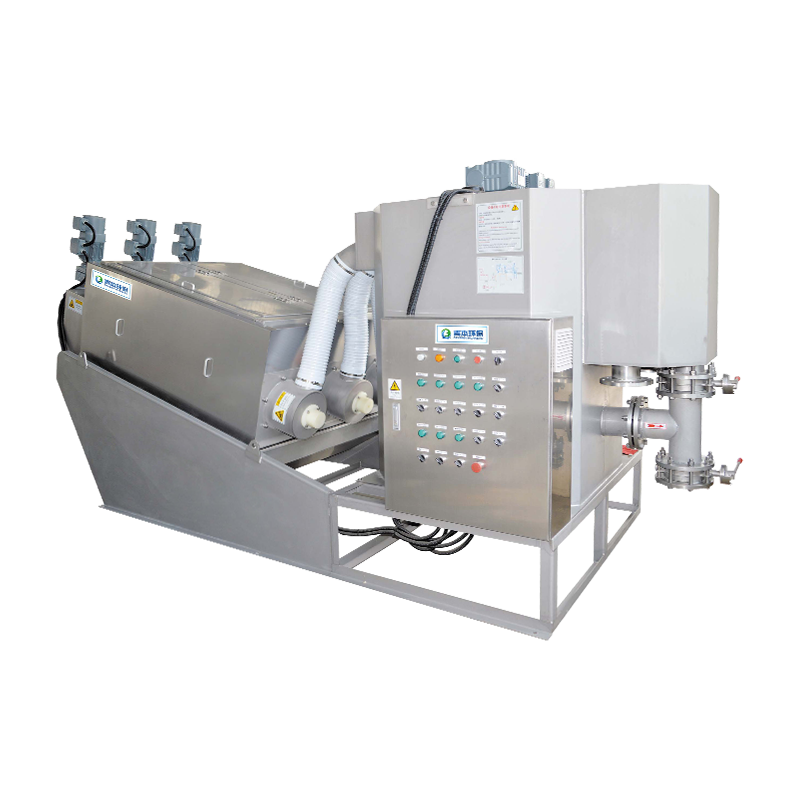
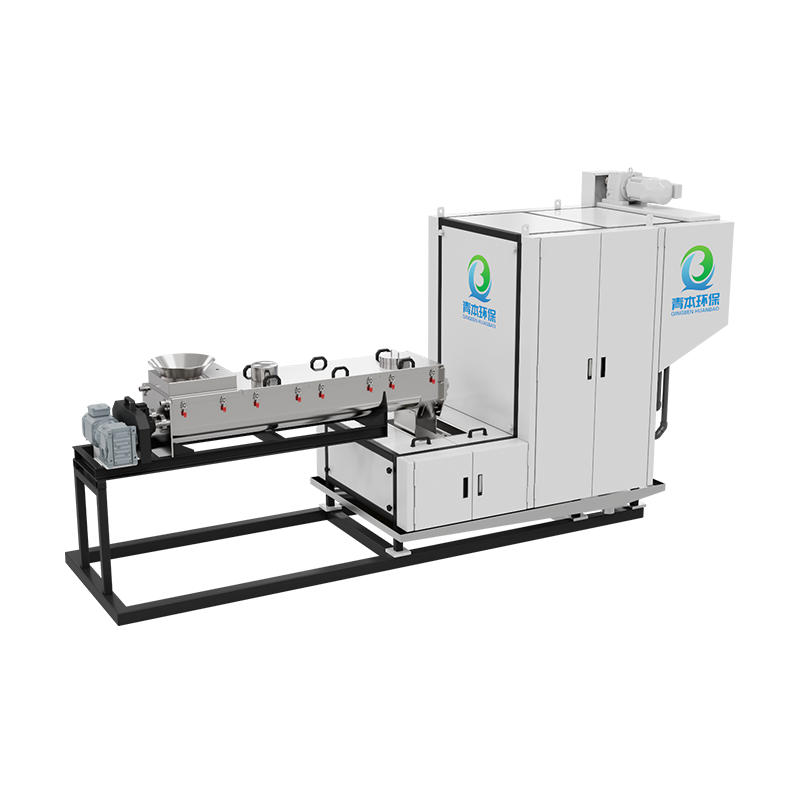
At its core, the screw press works by feeding conditioned sludge into a cylindrical screen drum, where a slowly rotating screw shaft gradually compresses the material as it moves forward. Filtrate is squeezed out through the screen gaps and collected below, while the dewatered cake is discharged at the end. This seemingly simple mechanism delivers exceptional performance because every component is designed for continuous, unattended operation.
Dewatering Technology Adoption Rate In Wastewater Plants (2026)
Source: Global Wastewater Treatment Equipment Survey, 2026 (multi-selection allowed)
Three structural advantages explain why adoption continues to climb:
- Self-cleaning design: The moving and fixed rings in the screen section create a self-cleaning mechanism that prevents clogging — eliminating the downtime and water waste associated with belt press washing systems.
- Low rotational speed: Operating at just 2–5 RPM, the screw shaft consumes a fraction of the energy that centrifuges require, while generating significantly less noise and vibration.
- Integrated automation: Modern automatic screw press dewatering machines incorporate PLC-controlled flocculation dosing, torque monitoring, and remote diagnostics, enabling 24/7 unattended operation.
Key Performance Metrics That Separate Screw Press From Competing Technologies
When plant managers evaluate industrial sludge dewatering equipment, four metrics drive the decision: cake dryness, energy consumption, polymer usage, and operational labor requirements. The screw press wins on nearly every dimension, as the comparison data below illustrates.
| Parameter | Screw Press | Belt Press | Centrifuge | Filter Press |
|---|---|---|---|---|
| Cake Dryness (% DS) | 18–25% | 15–22% | 20–28% | 25–35% |
| Energy (kWh/t DS) | 200–400 | 250–450 | 600–1,200 | 300–600 |
| Wash Water Required | None | High | Low | Medium |
| Operator Attention | Minimal | Medium | Medium | High |
| Noise Level (dB) | <65 dB | 70–80 dB | 80–90 dB | 65–75 dB |
| Automation Level | Full PLC | Partial | Partial | Batch/Manual |
Energy Consumption Trend: Screw Press vs Centrifuge (kWh/ton DS, 2020–2026)
How A Screw Press Sludge Dewatering Machine Actually Works
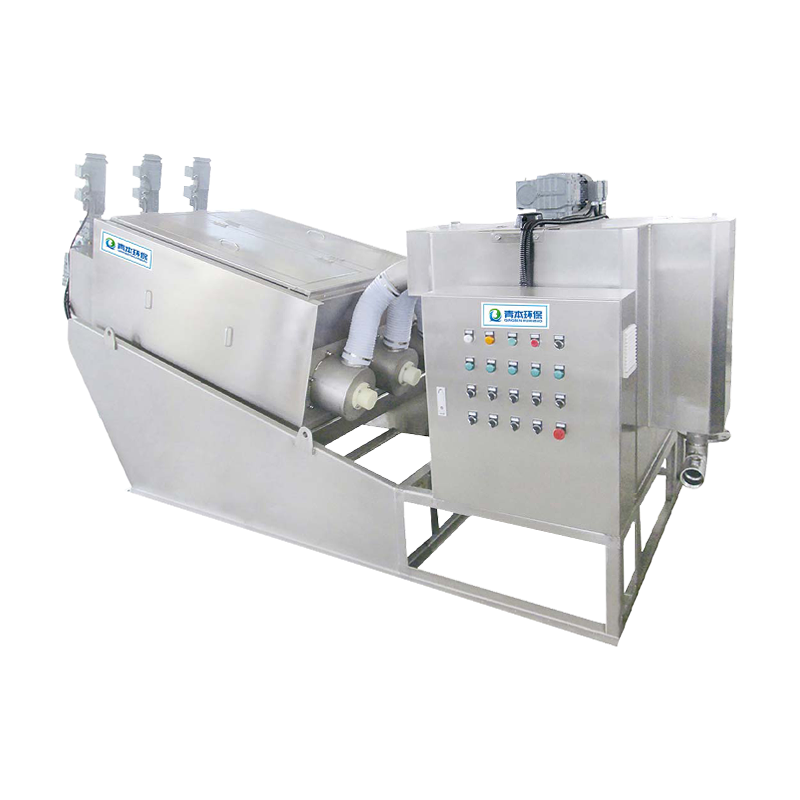
Understanding the internal mechanics helps explain why the screw press solid-liquid separator consistently outperforms expectations even in challenging sludge conditions. A complete automatic screw press dewatering machine integrates four functional units into a single, self-contained system:
1. Flocculation & Conditioning Tank
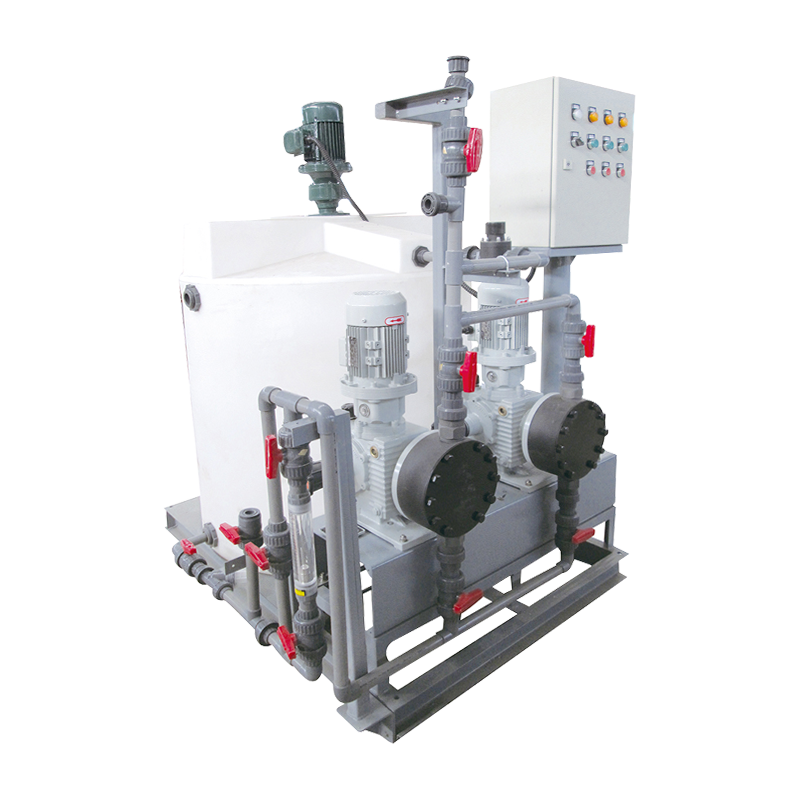
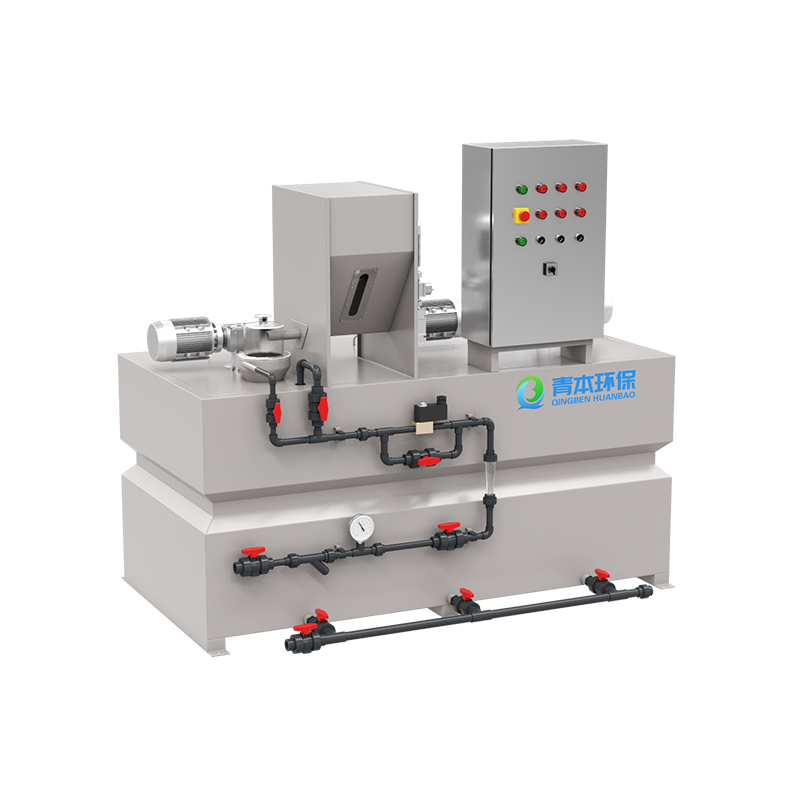
Incoming sludge is blended with polymer flocculant under gentle agitation. This causes fine suspended solids to aggregate into larger flocs that are easier to press and separate, directly improving filtrate clarity and cake dryness.
2. Sludge Thickening Zone
Flocculated sludge enters the thickening section of the screw drum, where free water drains through the filter screen gaps under gravity. Sludge concentration increases from typically 0.5–2% DS at feed to 5–8% DS before entering the pressing zone.
3. Pressing & Dewatering Zone
As sludge advances along the screw shaft, increasing back-pressure from the adjustable end plate forces water out through the screen. The gap between moving and fixed rings continuously self-cleans, preventing screen blinding and maintaining consistent dewatering efficiency throughout operation.
4. Filtrate Collection Tank
All separated liquid is channeled into an integrated collection trough. The clarified filtrate — typically with suspended solids below 100 mg/L — is returned to the treatment process or discharged according to site requirements, completing the full sludge dewatering system loop.
The automatic control cabinet ties all four stages together, adjusting polymer dosing rates, screw speed, and back-pressure based on real-time torque readings. This closed-loop automation is what enables continuous operation without requiring a dedicated operator standing by.
Industries Where The Screw Press Wastewater Treatment Machine Delivers Proven Results
The versatility of the screw press sludge dewatering system for factory use across different sectors is one of its most compelling advantages. The same core mechanism handles sludge from completely different industries — adjusting only the screw pitch, screen gap, and polymer type to match the specific solids characteristics.
Screw Press Deployment By Industry Sector (% Of Installations)
Sludge Types Handled Effectively
Biological (WAS) Sludge
Waste activated sludge from aerobic treatment — the most common type in municipal plants. The screw press handles this well even at low feed concentrations of 0.3–1% DS.
Chemical Precipitation Sludge
Generated in phosphorus removal and heavy metal treatment processes. The screw press manages the granular, abrasive nature of this sludge with minimal screen wear.
Mixed & Digested Sludge
Anaerobically digested sludge from large municipal treatment plants benefits from the screw press's ability to handle variable viscosity and fibrous content without clogging.
Industrial Process Sludge
From food processing, paper mills, and textile dyeing — often high in organic content and variable in composition. The industrial sludge dewatering equipment adapts to these variations through adjustable back-pressure settings.
Automation Features That Make 24/7 Unattended Operation Possible
The distinction between a basic screw press and a fully integrated automatic screw press dewatering machine lies in the intelligence built into the control system. Modern units from leading manufacturers incorporate automation that manages the entire process from sludge intake to cake discharge without manual intervention.
PLC-Controlled Polymer Dosing
Dosing pumps respond automatically to changes in sludge flow rate and concentration, maintaining optimal floc formation and minimizing polymer consumption — typically saving 10–20% on reagent costs compared to manual dosing.
Torque Monitoring & Protection
Real-time torque sensors detect overload conditions caused by tramp material or unusual sludge properties, triggering automatic reversal or shutdown to protect the screw and screen from damage.
Remote Monitoring & Alerts
SCADA integration and mobile alert systems allow one operator to supervise multiple high efficiency sludge dewatering press units across different facility areas, reducing staffing requirements substantially.
Automatic Start/Stop Scheduling
Time-clock and flow-signal-triggered start/stop scheduling allows the sludge dewatering system for factory environments to operate during off-peak energy hours, reducing electricity costs further.
Technology Comparison Radar: Screw Press vs Centrifuge vs Belt Press
How To Select The Right Screw Press For Your Facility
Choosing the correct model of screw press sludge dewatering machine requires matching equipment specifications to your actual sludge characteristics and operational requirements. The following parameters are the most critical to evaluate before specifying industrial sludge dewatering equipment.
Step 1: Define Your Sludge Characterization
- Feed concentration: Daily average and peak DS% values — the screw press handles feeds from 0.2% up to 4% DS effectively.
- Sludge type: Biological, chemical, mixed, or industrial — different types require different screw pitches and polymer programs.
- Flow rate: Average and peak daily flow volumes determine the required number of screw press units or model capacity class.
- Target cake dryness: Specifying the required output DS% determines whether standard or high-pressure configurations are needed.
Step 2: Review Key Equipment Specifications
| Specification | Small Scale | Medium Scale | Large Scale |
|---|---|---|---|
| Screw Diameter | 131–200 mm | 200–302 mm | 302–500 mm |
| Feed Capacity (m³/h) | 2–8 | 8–30 | 30–150 |
| Motor Power (kW) | 0.37–1.5 | 1.5–4 | 4–22 |
| Screw Speed (RPM) | 2–5 | 2–5 | 1–4 |
| Typical Application | Small factories, community plants | Mid-size industrial & municipal | Large municipal & industrial plants |
Step 3: Evaluate Lifecycle Factors
- Spare parts availability: Confirm that replacement screens, screw shafts, and rings are stocked locally or have short lead times.
- Material of construction: 304 stainless steel suits most applications; 316L SS or duplex stainless may be needed for aggressive chemical or high-chloride sludge environments.
- Manufacturer support: On-site commissioning, operator training, and remote diagnostic capability have a direct impact on long-term operational success.
Operational Cost Savings: What Plant Managers Report After Switching
Facilities that have transitioned from centrifuges or belt presses to screw press sludge dewatering systems report consistent cost reductions across multiple operating categories. The following figures reflect typical reported improvements from documented facility upgrade projects.
Reported Cost Reduction After Switching To Screw Press (% Reduction)
Beyond direct cost savings, facilities report a significant improvement in compliance confidence. The enclosed design of the screw press contains odors effectively, reducing complaints from neighboring areas — a benefit that is difficult to quantify financially but carries substantial operational value for plants located near residential zones.
The long service life of high-quality screw press components — with screen rings typically lasting 3–5 years under normal operating conditions and screw shafts lasting 8–12 years — further strengthens the total cost-of-ownership advantage over technologies that require more frequent component replacement.
About Qingben Environmental Technology: Your Trusted Screw Press Manufacturer
Qingben Environmental Technology (Jiangsu) Co., Ltd. is a professional enterprise specializing in the manufacturing and service of sludge and wastewater treatment equipment. Rooted in the field of sludge and wastewater treatment research and development, the company provides a comprehensive product line including screw press sludge dewatering machines, sludge drying equipment, complete sets of wastewater treatment equipment, and river and lake sediment drying equipment — along with full technical services throughout every project stage.
As a professional custom screw press sludge dewatering machine manufacturer and solid-liquid separator factory, Qingben offers a complete screw press system that integrates an automatic control cabinet, flocculation and conditioning tank, sludge thickening and dewatering body, and liquid collecting tank. This integrated design enables efficient flocculation under automatic operation, continuously completing sludge thickening, pressing, and dewatering — while returning or discharging the collected filtrate as required.
Project Consultation
Expert evaluation of sludge characteristics, flow volumes, and facility requirements to define the optimal sludge dewatering system for your factory.
Custom Design & Engineering
Tailored equipment configurations and process designs for screw press wastewater treatment machines matched to your specific application and installation constraints.
On-site Commissioning
Hands-on installation support, system startup, and operator training to ensure successful implementation from day one.
After-sales & Maintenance
Ongoing technical support, spare parts supply, and preventive maintenance programs ensuring the long-term efficiency of your high efficiency sludge dewatering press investment.